If a medical condition prevents you from working, Social Security disability benefits can provide a vital financial lifeline. The Social Security Administration (SSA) administers two programs: Social Security Disability Insurance (SSDI) for workers who have paid into the system, and Supplemental Security Income (SSI) for individuals with limited income and resources. Both programs have strict eligibility criteria and a complex application process that can take months or even years to navigate. Understanding your legal rights at each stage -- from the initial application through appeals and ongoing reviews -- is essential to securing the benefits you deserve.
This guide breaks down the entire process, explains the difference between SSDI and SSI, details what evidence you need to prove your disability, and walks through the appeals process if the SSA denies your claim. It also covers your rights during continuing disability reviews and what happens if you want to try working while receiving benefits.
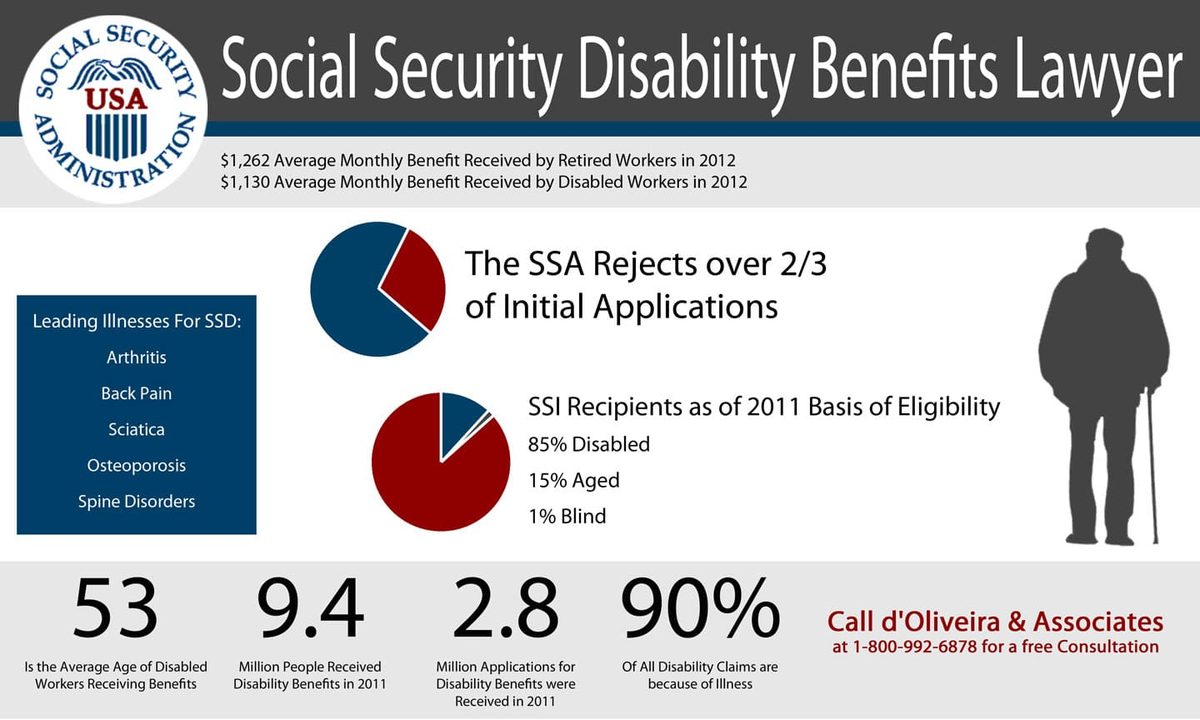
The SSA reports that roughly one in four 20-year-olds will become disabled before reaching retirement age. Despite this, more than 60 percent of initial disability applications are denied each year, often due to incomplete evidence or procedural errors rather than a lack of a qualifying condition.
Understanding Social Security Disability Programs: SSDI vs. SSI
Many people assume there is a single federal disability program, but the SSA actually administers two distinct ones. SSDI is funded through payroll taxes under the Federal Insurance Contributions Act (FICA). If you have worked long enough and recently enough in jobs covered by Social Security, you may qualify for SSDI regardless of your other income or assets. Your benefit amount is based on your average lifetime earnings before your disability began.
SSI, by contrast, is a needs-based program funded by general tax revenues. It pays a fixed maximum benefit amount (adjusted annually) to adults and children who are disabled and have very limited income and resources. As of 2026, the federal maximum monthly SSI payment is $967 for an individual and $1,450 for a couple, though many states supplement this amount. Unlike SSDI, SSI eligibility depends on your financial situation, not your work history.
You can qualify for both programs simultaneously -- this is called a "concurrent" claim. In that case, you may receive SSDI based on your work record plus an SSI payment if your SSDI amount falls below the SSI threshold. Understanding which program or programs you may qualify for is an important first step.
Both programs use the same medical criteria to define disability, so the medical evidence you gather applies equally to SSDI and SSI. The SSA defines disability as the inability to engage in any substantial gainful activity (SGA) due to a medically determinable physical or mental impairment that is expected to last at least 12 months or result in death. In 2026, SGA is defined as earning more than $1,620 per month for non-blind individuals.

Medical Eligibility: Meeting the SSA Definition of Disability
The SSA maintains a Listing of Impairments, often called the "Blue Book," which describes medical conditions severe enough to automatically qualify as disabilities. The Blue Book covers fourteen categories of body systems, including musculoskeletal disorders, cardiovascular conditions, respiratory illnesses, neurological disorders, mental health conditions, immune system disorders, and more. If your condition matches or equals a listing in severity, you may be approved without further analysis.
Even if your condition does not precisely match a Blue Book listing, you may still qualify if the SSA determines that your residual functional capacity (RFC) prevents you from performing your past work or any other work that exists in significant numbers in the national economy. The SSA assesses your RFC based on your medical records, doctors' opinions, and your own descriptions of your symptoms and limitations. This assessment considers your ability to perform physical tasks like sitting, standing, lifting, and carrying, as well as mental tasks like remembering instructions, concentrating, and interacting with others.
To build a strong case, you need thorough medical documentation. This includes treatment notes from your doctors, hospital records, imaging studies (X-rays, MRIs, CT scans), laboratory results, and a detailed statement from your treating physician describing your diagnosis, symptoms, limitations, and prognosis. The SSA gives special weight to the opinions of treating physicians who have a long-term relationship with you.
Your age, education, and work history also matter for the eligibility determination. Generally, the older you are, the harder the SSA considers it to retrain for a new occupation. If you are 50 or older, the SSA's medical-vocational guidelines (the "grid rules") may make it easier to qualify if your RFC limits you to sedentary or light work and you have no transferable skills.

Work Credits and Non-Medical Eligibility Requirements
For SSDI, you must have earned enough work credits through your employment history. You earn up to four credits per year based on your annual earnings. In 2026, you earn one credit for each $1,810 in wages or self-employment income. The number of credits you need to qualify for SSDI depends on your age at the time your disability began. Generally, you need 40 credits total, with 20 of those earned in the 10-year period immediately before your disability began. Younger workers may qualify with fewer credits.
For SSI, there is no work credit requirement, but your income and resources must fall below strict limits. In 2026, an individual's countable resources cannot exceed $2,000, and a couple's cannot exceed $3,000. Resources include cash, bank accounts, stocks, bonds, real estate (other than your primary residence), and vehicles beyond one. The SSA also counts most forms of income, including wages, unemployment benefits, pensions, and gifts, against the SSI income limit.
Both programs require that your disability be expected to last at least 12 months or be terminal. Short-term or temporary disabilities do not qualify, no matter how severe. You also must be willing to cooperate with the SSA's evaluation process, attend any consultative examinations they schedule, and provide all requested medical records on time.
It is important to note that receiving unemployment benefits while applying for disability can create complications. When you certify for unemployment, you are stating that you are ready, willing, and able to work -- which may contradict your disability claim. If you are receiving unemployment benefits, be prepared to explain how your situation is consistent with your disability application.

How to File Your Initial Disability Application
You can apply for Social Security disability benefits online at the SSA's website, by phone at 1-800-772-1213, or in person at your local Social Security field office. The online application is the most convenient option and allows you to save your progress and upload documents electronically. The application asks for detailed information about your medical condition, work history, doctors and treatment facilities, medications, and daily activities.
Before you begin, gather all your medical records, a list of every doctor and hospital you have visited (with dates and addresses), your work history for the past 15 years (including job titles, duties, and dates of employment), your birth certificate, and your most recent W-2 or tax return. Having this information organized upfront will make the process much smoother.
You should also prepare a detailed function report describing how your condition affects your daily life. Describe your limitations honestly and specifically. Instead of saying "I have trouble walking," explain how far you can walk before needing to rest, whether you use a cane or walker, and how your pain or fatigue affects your ability to perform household chores, shop, or care for yourself.
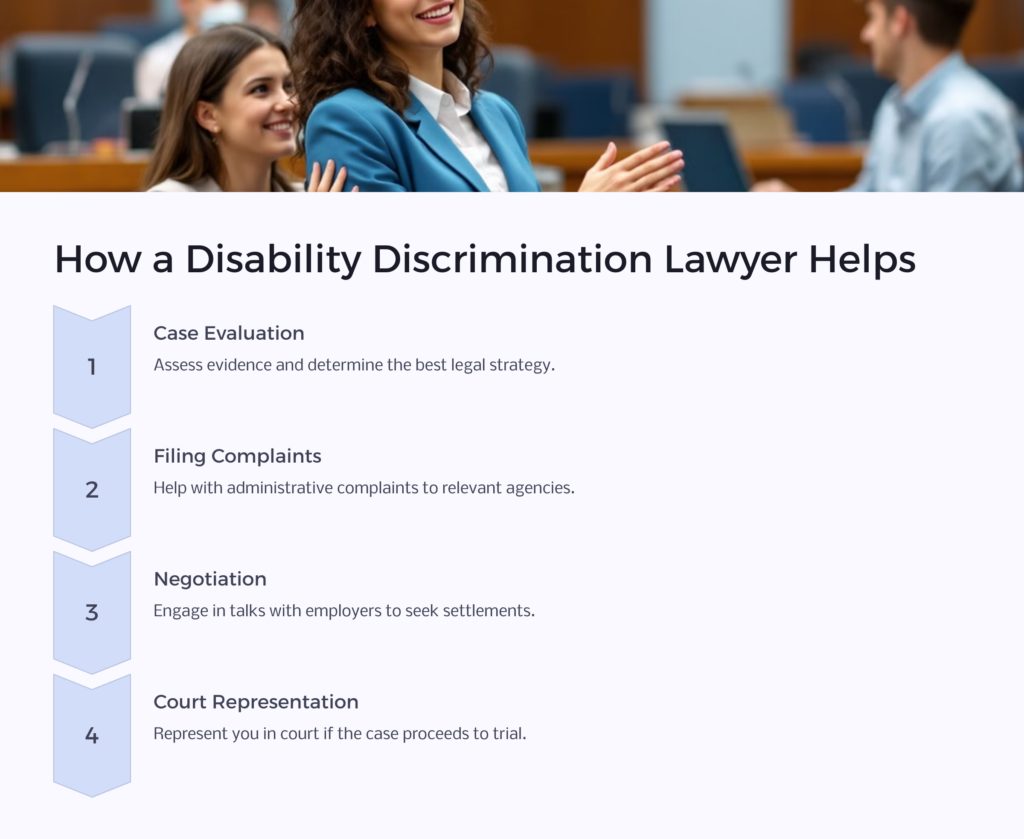
Many applicants find it helpful to work with a disability advocate or attorney from the start. Representatives who specialize in Social Security disability can help you prepare a complete application, gather the right medical evidence, and avoid common mistakes that lead to denials. Fees for disability representatives are regulated by the SSA and are generally contingent on winning your case, capped at 25 percent of past-due benefits up to $7,200.
After you submit your application, the SSA forwards it to the Disability Determination Services (DDS) agency in your state. DDS will request your medical records, may schedule a consultative examination with an independent doctor, and will make the initial decision on your claim. The average processing time for an initial decision ranges from three to six months, though it can take longer depending on your state and the complexity of your case.
What Happens After a Denial and How to Navigate the Appeals Process
If the SSA denies your initial application, do not give up. Most disability claims are denied at the initial level, but a significant percentage are approved on appeal. The appeals process has four levels: reconsideration, hearing before an administrative law judge (ALJ), Appeals Council review, and federal court review. You must generally complete each level before moving to the next, and strict deadlines apply at every stage.
The first appeal level is reconsideration. You must file a request for reconsideration within 60 days of receiving your denial notice (plus five days for mailing time). A different DDS examiner who did not participate in the initial decision reviews your claim again. At this stage, you can submit new medical evidence and update the SSA about any changes in your condition. The reconsideration stage also typically takes three to six months. Statistically, reconsideration approval rates are relatively low, so many applicants proceed to the next level.
Keep track of all deadlines carefully. The 60-day window is strict, and if you miss it, you may have to start the entire application process over from scratch. If you cannot meet a deadline, request an extension in writing before the deadline passes. The SSA generally grants reasonable extension requests.
While waiting for a decision, continue receiving medical treatment and keep detailed records of all appointments, medications, and symptoms. Any gaps in treatment can be used by the SSA to argue that your condition is not as severe as you claim. Even if you feel that treatment is not helping your condition significantly, maintaining regular contact with your doctors demonstrates that you are taking your health seriously.
Preparing for Your Disability Hearing Before an ALJ
If your claim is denied at the reconsideration level, you can request a hearing before an administrative law judge. This is the most important stage of the appeals process and offers the highest chance of approval. You must request the hearing within 60 days of the reconsideration denial. Current wait times for a hearing vary by region but average 6 to 12 months, sometimes longer in high-volume hearing offices.
At the hearing, the ALJ will ask you questions about your medical condition, symptoms, daily activities, work history, and why you are unable to work. A vocational expert may also testify about whether jobs exist in the national economy that someone with your RFC, age, education, and work experience could perform. The ALJ may also ask a medical expert to review your records if your condition is complex or poorly documented.
Thorough preparation is essential. Review your entire claims file so you are familiar with what the SSA has collected. Practice describing your limitations in concrete terms. Bring a witness who can testify about your limitations -- this can be a family member, friend, former coworker, or caregiver. Make sure your medical records are up to date and that your treating physician has submitted a current RFC assessment form that clearly states your functional limitations.
You have the right to be represented by an attorney or non-attorney disability advocate at your hearing. Claimants represented by a lawyer are significantly more likely to be approved at the hearing level. Your representative can prepare you for questioning, make legal arguments, cross-examine the vocational expert, and ensure that the record contains all relevant medical evidence.
If the ALJ denies your claim, you may appeal to the SSA's Appeals Council within 60 days. The Appeals Council will review the ALJ's decision for legal or procedural errors. If the Appeals Council denies your appeal or declines to review your case, your final option is to file a civil action in federal district court within 60 days.
Continuing Disability Reviews and Your Ongoing Rights
Even after you are approved for disability benefits, your case is not closed permanently. The SSA conducts periodic continuing disability reviews (CDRs) to verify that you remain disabled and eligible for benefits. The frequency of CDRs depends on the expected severity and duration of your condition. If the SSA expects your condition to improve (a "medical improvement expected" diary), you may be reviewed every 6 to 18 months. If improvement is possible but not certain ("medical improvement possible"), reviews occur about every three years. If improvement is not expected, reviews happen every five to seven years.
When a CDR arrives, the SSA will send you a packet to complete. You must provide updated medical records and describe your current condition, treatment, and limitations. Cooperate fully and respond promptly. If you fail to respond or refuse to cooperate, the SSA may suspend your benefits. If your condition has not improved and you are still unable to work, your benefits should continue without interruption.
You have important rights during a CDR. You can submit evidence from your doctors showing that your condition has not improved. You can appeal if the SSA decides to terminate your benefits. While your appeal is pending, you can request that your benefits continue -- though if you ultimately lose the appeal, you may have to repay those benefits. If the SSA decides to stop your benefits, you must receive a detailed written explanation of why, and you have the right to review the evidence used in the decision.
Keep your address and contact information current with the SSA at all times. Missing a CDR notice because it was sent to an old address can result in benefit suspension through no fault of your own. Also, promptly report any changes in your medical condition, work activity, or personal circumstances that could affect your eligibility.

Working While Receiving Disability Benefits: Trial Work Period and Ticket to Work
Many disability beneficiaries want to return to work if their condition improves, and the SSA offers several programs to support this transition without an immediate risk of losing benefits and health coverage. The trial work period (TWP) allows you to test your ability to work for up to nine months (not necessarily consecutive) within a rolling 60-month period. During the TWP, you can earn any amount without affecting your benefits. In 2026, any month in which you earn more than $1,110 counts as a trial work month.
After the TWP ends, you enter the extended period of eligibility (EPE), which lasts 36 months. During this period, the SSA withholds your benefit payment for any month in which your earnings exceed the SGA level of $1,620. If your earnings fall below SGA, your benefits resume for that month. This gives you a three-year window to see if sustainable employment is possible.
The Ticket to Work program provides free vocational rehabilitation, job training, and employment support services through authorized providers. Participating in Ticket to Work does not trigger a CDR, and you have the right to stop participating at any time without penalty. The program is entirely voluntary and designed to help you build skills and confidence at your own pace.
You can also take advantage of continued Medicare coverage (for SSDI beneficiaries) for at least 93 months after your TWP, even if you are no longer receiving cash benefits. SSI recipients can continue Medicaid coverage under Section 1619(b) as long as they still need the coverage, meet the SSI asset limit, and have earnings below a state-specific threshold. Understanding these health coverage protections is critical because fear of losing health insurance is one of the biggest barriers to returning to work for people with disabilities.
If you decide you want to attempt a return to work, talk to a benefits counselor through the SSA's Work Incentives Planning and Assistance (WIPA) program. These counselors provide free, personalized advice on how working will affect your specific benefits -- including cash payments, Medicare, and Medicaid -- so you can make an informed decision without risking your financial security.

Navigating the Social Security disability system can feel overwhelming, but understanding the process and your rights at every stage puts you in a much stronger position. From choosing the right program and gathering medical evidence to appealing a denial and exercising your right to return to work, each step has clear rules designed to protect applicants and beneficiaries. A knowledgeable representative -- whether an attorney or a non-attorney advocate -- can make a meaningful difference in the outcome of your case, especially at the hearing level. With the right preparation and persistence, the disability safety net that you have contributed to through years of work can be there when you need it most.
If your claim has been denied or you are considering applying for benefits, contact a qualified Social Security disability attorney or advocate for a case evaluation. Many offer free initial consultations and work on a contingency basis, meaning they only get paid if you win. Taking that first step toward professional guidance can save you months of frustration and significantly improve your chances of approval.
Frequently Asked Questions about Social Security Disability Benefits
How long does the Social Security disability application process take?
The initial decision typically takes 3 to 6 months. If denied and you appeal, the reconsideration stage adds another 3 to 6 months. If you request a hearing, the wait for an ALJ hearing averages 6 to 12 months depending on your region. A fully contested case with all appeal levels can take 18 to 24 months or longer from initial application to final decision.
Can I apply for Social Security disability if I have never worked?
Yes, but only for SSI (Supplemental Security Income), which does not require a work history. You must meet the strict income and resource limits, and you must meet the same medical disability criteria. SSDI, however, requires sufficient work credits from past employment covered by Social Security.
What conditions automatically qualify for disability?
No condition guarantees automatic approval, but the SSA's Listing of Impairments (Blue Book) describes conditions severe enough to qualify if the medical evidence meets the listing criteria. Common listings include musculoskeletal disorders, cardiovascular disease, chronic respiratory illness, neurological disorders, mental health conditions (such as depression, anxiety, and schizophrenia), cancer, immune system disorders, and vision or hearing loss.
Can I work part-time while applying for disability benefits?
You can work as long as your earnings remain below the substantial gainful activity (SGA) level. In 2026, SGA is $1,620 per month for non-blind individuals. Working above SGA may disqualify you from receiving benefits. However, earning below SGA while applying can actually support your case by showing that you are trying to work but cannot earn a living due to your disability.
Do I need a lawyer to apply for Social Security disability?
You do not need a lawyer to apply, but having professional representation significantly increases your chances of approval, especially at the hearing level. Disability advocates and attorneys can help you gather the right medical evidence, prepare for hearings, and navigate the complex appeals process. Most work on a contingency basis and are paid only if you win, with fees capped by the SSA at 25 percent of past-due benefits up to $7,200.